Can You Be a Flight Attendant If You Have Tattoos? The Real Answer for Australian Airlines
I get asked about tattoos constantly. It comes up in every coaching session, on every forum I follow, and in my inbox at least twice a week. So let me give you the plain, honest answer rather than the vague "it depends" you usually find online.
Yes, tattoos can affect your ability to become a flight attendant. Whether they actually do depends on where your tattoos are, which airline you are applying to, and how honest you are with yourself about what "visible in uniform" actually means.
The Rule That Applies Across Almost Every Airline
With very few exceptions, the rule across Australian and international carriers is the same: no tattoos visible while in uniform.
That sounds simple. It is not always as clear as it sounds.
The uniform is the key word. Not your interview outfit. Not your assessment day clothes. The airline's actual uniform: the specific shirt, skirt or trousers, blazer, scarf, and shoes that you will wear every working day for the rest of your time with that airline. Some uniforms have long sleeves. Some have short. Some include a scarf that can cover a small tattoo on the neck. Some do not.
When you are assessing whether your tattoo is a problem, you need to be thinking about the uniform, not what you are wearing when you apply.
Qantas: No Visible Tattoos in Uniform
Qantas updated its grooming standards in 2023, making them more gender-inclusive and relaxing some of the older rules around hair and shoes. The tattoo policy did not change. Qantas cabin crew cannot have tattoos visible while in uniform. That includes hands, wrists, forearms if the uniform sleeve finishes above the wrist, neck, face, and any other exposed area.
Qantas is specific that covering tattoos with makeup, bandages, or any other cosmetic method is not permitted. The tattoo needs to be genuinely covered by the uniform itself.
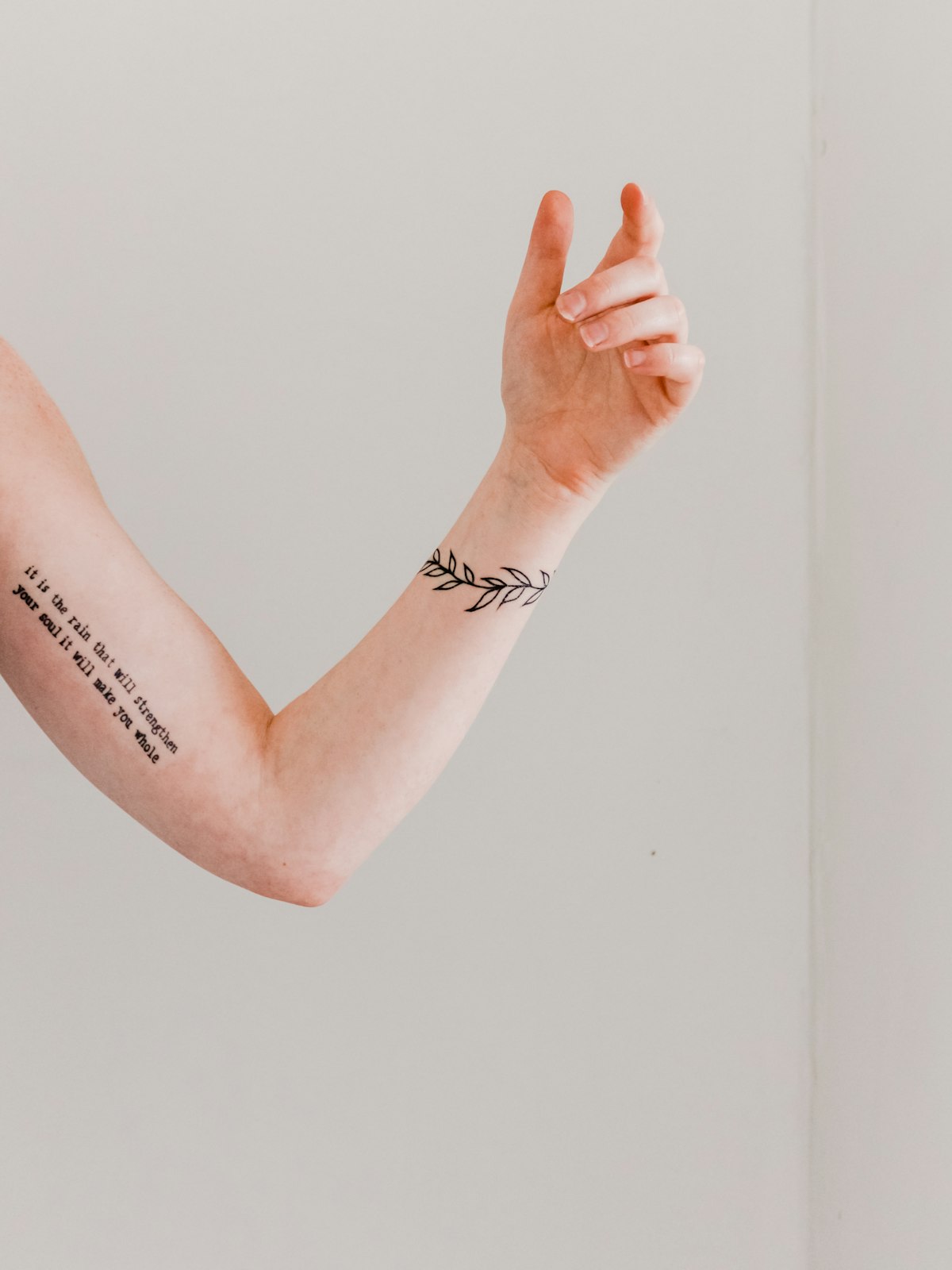
A tattoo on your upper arm that sits entirely under a short sleeve is fine. A tattoo on your forearm that is exposed when you reach overhead is not. A tattoo on your ankle is visible when you wear the Qantas shoe and trouser combination, so that matters.
Think carefully about this before you apply. I have seen candidates get through to the final stage of the Qantas process and then be held at the medical or uniform fitting when a tattoo they thought was fine turned out to be visible. It is a disappointing way to end a strong application.
Virgin Australia: Same Principle, Different Uniform
Virgin Australia's policy mirrors Qantas: no tattoos visible in uniform. The Virgin uniform has slightly different coverage than the Qantas uniform, so the practical implications vary depending on what you have and where it is.
The assessment process at Virgin will typically involve a visual check of any tattoos at some point during the recruitment day. If you have tattoos that you believe are covered by the uniform, be prepared for that to be verified. Do not assume. If you are uncertain, contact the Virgin recruitment team before you apply and ask directly. They would rather answer that question upfront than have both parties invest time in a process that cannot move forward.
Emirates, Qatar Airways, and Etihad: Stricter Still
If you are considering a Middle Eastern carrier, the standards are tighter. Emirates requires no visible tattoos and is explicit that this applies to all exposed areas when in uniform and when in the Dubai community outside of work hours. Their crew live and work in a conservative cultural environment, and the grooming standards reflect that.
At Emirates open days, you will sometimes be asked about tattoos during the registration stage or the individual interview. Be honest. If you have a tattoo that you think is borderline, disclose it and let the recruiter make the assessment. Being caught later is far worse than being upfront at the beginning.
Qatar Airways and Etihad have similarly strict policies. Face, neck, and hand tattoos are an automatic disqualifier at all three carriers. Tattoos in areas not normally exposed by the uniform may be acceptable, but this is assessed case by case.
Jetstar: Slightly More Relaxed, But Not Open
Jetstar is a low-cost carrier with a somewhat less formal culture than Qantas or the Middle Eastern airlines, and their grooming standards reflect that. That said, they still require that tattoos not be visible in uniform. The Jetstar uniform includes a short-sleeved option, so forearm tattoos that are visible when the arms are extended are still a problem.
Rex Regional Express follows a similar policy. Regional carriers generally apply the same principle: visible in uniform means not acceptable.
What "Visible in Uniform" Actually Means
Here is where candidates most commonly get this wrong. They look at their tattoo while wearing their interview outfit and decide it is fine. Then they arrive at training and the uniform tells a different story.
Things to check for the specific airline you are targeting:
- Sleeve length. Does the uniform shirt or blouse have long or short sleeves? Where exactly does it finish?
- Collar height. Does the uniform cover the lower neck? Does the scarf, if there is one, sit high enough to cover a collarbone or lower neck tattoo?
- Trouser and shoe combination. Is there a gap between the hem and the shoe? Ankle tattoos are often caught here.
- Hand and finger tattoos. Gloves are not part of standard cabin crew uniform. Any tattoo on the hand, finger, or wrist will be visible every time you interact with a passenger.
If you want to check for a specific airline, look at images of their current crew in uniform and assess honestly. Better still, contact me and I can give you a direct read on whether your situation is likely to be an issue.
What If You Already Have Tattoos?
If you have tattoos that are visible in uniform and you want to fly, you have a few options.
The first is to target airlines or roles where the uniform genuinely covers them. This is worth researching properly rather than assuming.
The second is tattoo removal or fading. This takes time and money, and it is not a guarantee, but if your aviation career is a serious long-term goal it is worth considering. There are good clinics across Australia that specialise in fading tattoos to the point where they are no longer clearly visible. This is not something to rush.
The third is to be honest with yourself about whether a cabin crew career is the right fit given your current situation. I say this not to discourage anyone, but because I have watched candidates spend months preparing for a process they were never going to clear because of a tattoo they were not willing to address. That time and emotional investment is better directed toward a realistic plan.
What About Future Tattoos?
This is the question I really want to answer directly, because it matters most for younger candidates and school leavers who are reading this before they have made permanent decisions.
If becoming a flight attendant is a genuine goal for you, think very carefully before getting any tattoo that will be visible in an airline uniform. This includes the hands, wrists, forearms, neck, face, ankles, and feet. Upper arms under the sleeve, the torso, the upper back and shoulders, and the upper thighs are generally safe across most carriers.
I am not telling you not to get tattoos. That is your choice and not my business. I am telling you that a tattoo on your forearm or hand will close doors with most major airlines, and that is a real and permanent consequence worth understanding before you commit to it.
I have had this conversation with enough candidates to know that some people get tattoos without thinking about the career implications and then spend years regretting it. That is not a judgement. It is just a fact about how airline hiring works, and you deserve to know it upfront.
The Bottom Line
Tattoos are normal. They are increasingly common. The airlines know this. But the policies have not changed at most major carriers, and the reason is not arbitrary: cabin crew represent the airline's brand every time they interact with a passenger, across cultures and countries with very different social norms around body modification.
That is the context behind the rules. Understanding that context makes it easier to accept the rules even if you do not personally agree with them.
If you have questions about whether your specific situation is likely to be an issue at a specific airline, get in touch with me directly through the ReachFTS contact page. I will give you a straight answer.
And if you are ready to start working on the rest of your application, my Interview Preparation Manual covers everything from your resume through to the final interview, for every major Australian and international carrier. My one-on-one coaching sessions are available face-to-face or via Teams from anywhere in Australia.
Denise Burns has worked in aviation for over 45 years and has coached hundreds of candidates into cabin crew roles across Australian and international airlines. She runs ReachFTS, a specialist flight attendant training and coaching service.
Get the complete guide: Interview Preparation Manual ($160)
Everything you need to prepare for your flight attendant interview, from application to final offer.
Get the Manual →Ready to start your journey?
Get the tools and guidance you need to land your dream cabin crew role.